A New Milestone for Educating Deaf and Hearing Students: Sign Bilingualism and Co-enrolment

Born to See(KPF 19SCF07)(Chinese Only)
Connect. Embrace. Hong Kong Sign Language
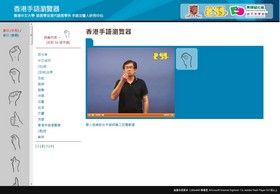
HKSL Browser

Hong Kong Sign Language Medical Databank

Hong Kong Sign Language Sex Education Website

Linking Hands and Hearts Fun Day
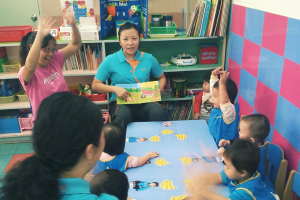
Love Ideas HK Programme – “Learning Sign Language – Start from Infants”
Macau Disaster-relief Sign Language Platform
Zero Project Award Winner 2020
Developed by The Centre for Sign Linguistics and Deaf Studies (CSLDS) of the Department of Linguistics and Modern Language at The Chinese University of Hong Kong (CUHK), the Sign Bilingualism and Co-enrolment in Deaf Education (SLCO) Programme has been awarded the Zero Project 2020 - Innovative Practice Award on Education by the Essl Foundation, in recognition of the Programme’s distinguished contribution in driving access to mainstream inclusive education for the deaf.
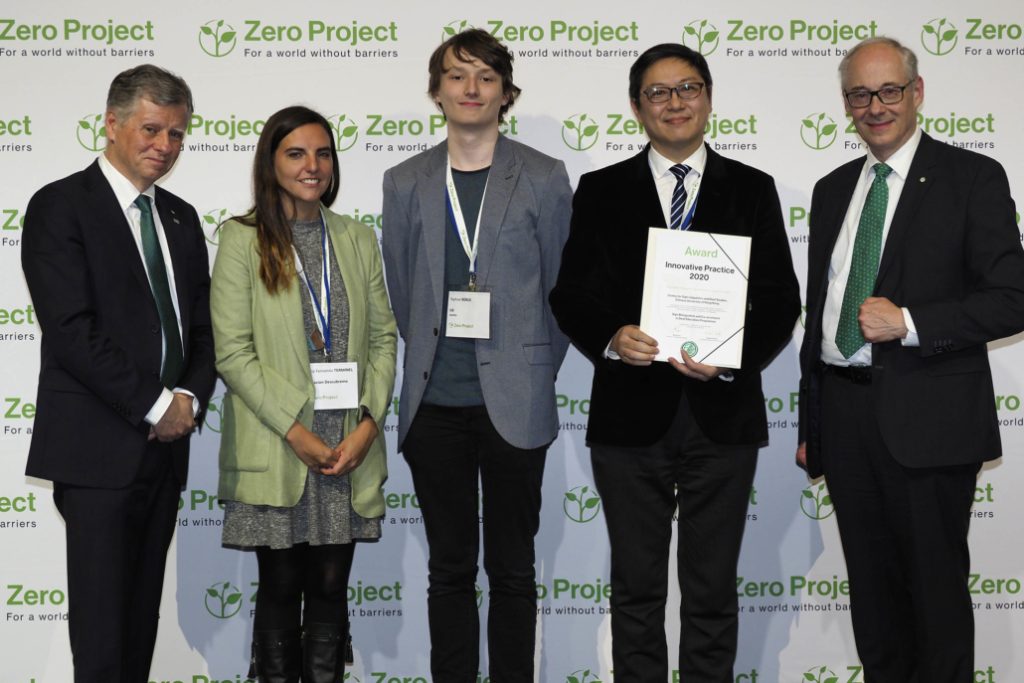
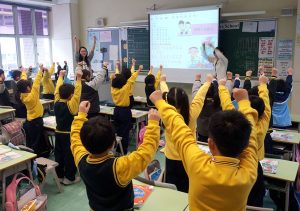
The SLCO Programme is an inclusive education project dedicated to promoting whole school participation of teachers and students alike. Since 2006, the research team led by Professor Gladys Tang from CUHK Department of Linguistics and Modern Language has gradually established the SLCO Programmes in kindergartens, primary and secondary schools, enabling deaf and hard of hearing children as well as hearing children to learn together in both signed and spoken languages in a bilingual teaching environment. 18 years of educational support are available to the children. Over the years, SLCO has provided different services to more than 500 people. In 2019, up to 160 deaf and hard of hearing children have benefited from it. Most of the deaf children involved have severe hearing loss. Learning sign language not only helps the deaf and hard of hearing children become more articulate, but also enables them to learn together with hearing students and to access classroom information in a sign bilingual and barrier-free educational environment. Such learning opportunities were unavailable to them before due to hearing loss. At the same time, hearing students have the opportunity to become “sign language masters” by participating in the project, helping them build empathy and acceptance of the deaf and absorb knowledge in a teaching environment with rich visual elements.
More infomation, please see the factsheet or the Zero Project website.
Talent-Wise
The Centre for Sign Linguistics and Deaf Studies (CSLDS) of The Chinese University of Hong Kong (CUHK) has been actively involved in employing deaf people in Hong Kong since its establishment in 2003. Recently, CSLDS joined the Talent-Wise Employment Charter and Inclusive Organisations Recognition Scheme (Charter Scheme) and last week it received the ‘Friendly Employment Award’ from the Labour and Welfare Bureau.
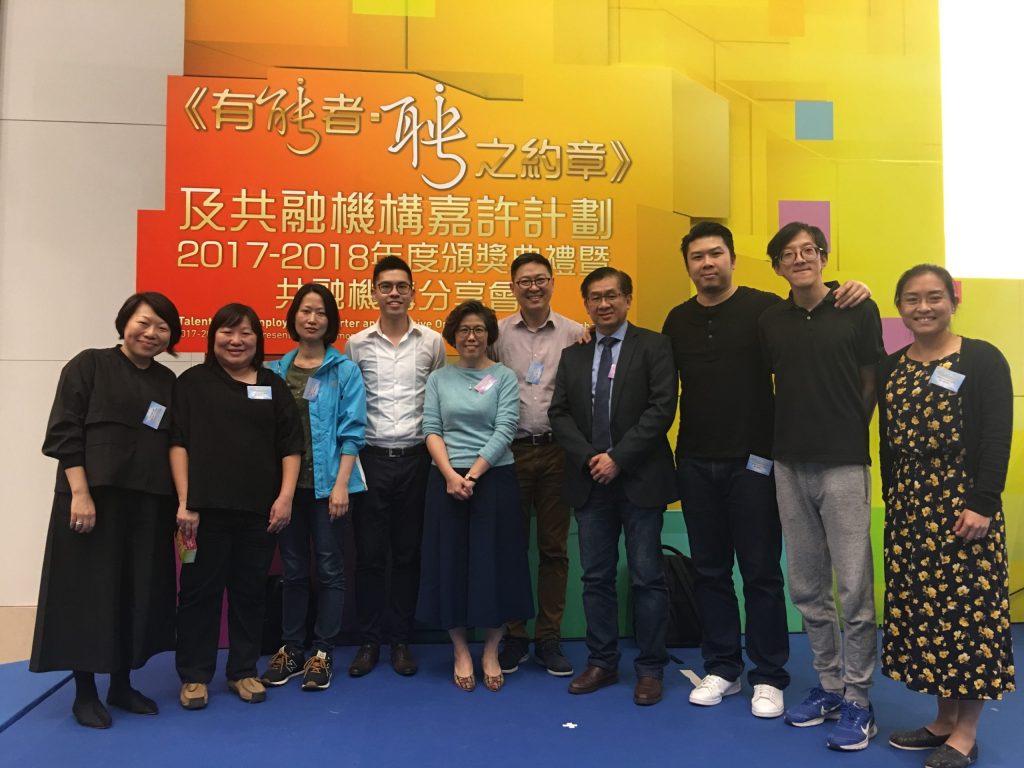
Prof. Gladys Tang, Director of CSLDS and Professor of the Department of Linguistics and Modern Language at CUHK, remarked, “Despite the limited educational and work opportunities in the past, given appropriate training, deaf employees can be as productive as hearing employees, and prove themselves to be indispensable collaborators in work and research.”
Click click here for more information.
Zero Project Award Winner 2018
The Asian SignBank was awarded as an Innovative Practice of the Zero Project 2018, for providing a practical solution to improve accessibility for persons with disabilities.
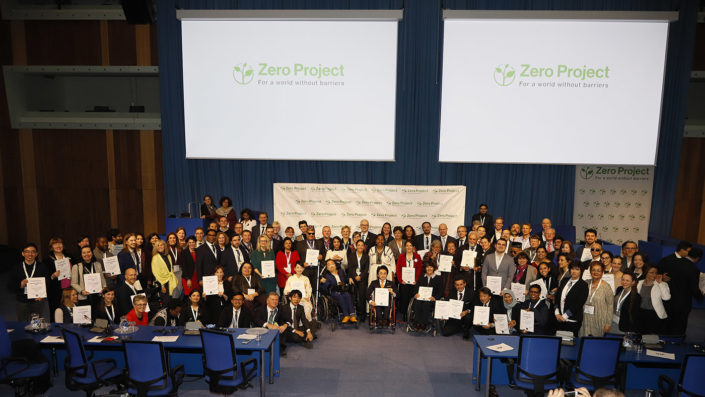
The Asian SignBank (ASB) is a grant-funded project based in Hong Kong, China, documenting Asian sign languages to support sign language research and development through a searchable online database of over 6,000 signs. The project is a collaboration of deaf and hearing researchers jointly with the Centre for Sign Linguistics and Deaf Studies of the Chinese University of Hong Kong, and with support from the Nippon Foundation.
For more information about the award, please see the factsheet or the Zero Project website
Chief Executive's Award for Teaching Excellence
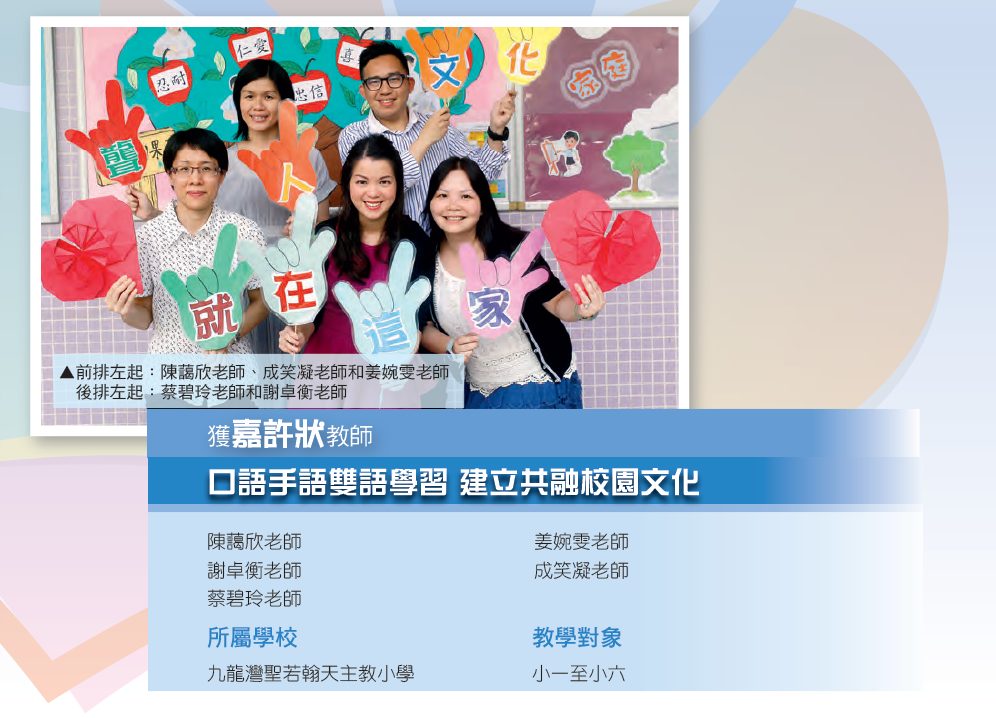
九龍灣聖若翰天主教小學五位「手語雙語共融教育計劃」工作小組的老師在 2015/16 行政長官卓越教學獎獲得特殊教育需要嘉許狀。學校和老師們多年來的努力,讓計劃的成果獲得肯定!
Click here for more information.
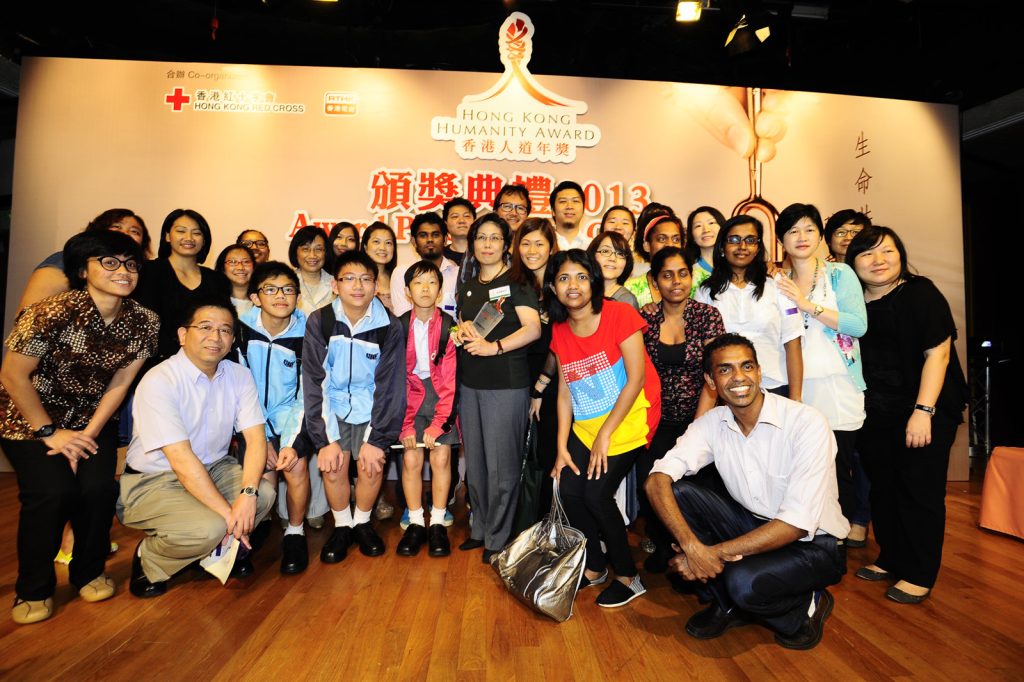
Hong Kong Humanity Award
Professor Tang Wai-lan, Gladys, has been conducting linguistic research on Hong Kong Sign Language and deaf children’s development of sign language and spoken language since the 1990s. From her interactions with deaf people over the years, she has noticed a general misunderstanding about sign language in society. The misunderstanding has undermined the importance of sign language in educating deaf students. Consequently, deaf people have been denied equal opportunities in education and employment. “Although deaf people are in the minority in society and the student population is only about 2,000 annually, we must not leave out any of them – this is a fundamental principle of education,” said Professor Tang. Professor Tang is determined to improve deaf people’s opportunities for university education and to raise their academic standard. She hopes that, besides the oralist approach, some deaf students in Hong Kong may enjoy the benefits of the sign bilingual approach in their education, i.e. being supported by sign language and spoken language.
For deaf adults of Hong Kong and Asia, Professor Tang has been organizing diploma and higher diploma programs in sign linguistics and sign language teaching. The higher diploma program aims to qualify deaf people to apply to universities for higher education. Alternatively, they will become competent enough to be professional sign language teachers. Some deaf graduates of the programs are currently part-time instructors for the Hong Kong Sign Language electives at The Chinese University of Hong Kong. Their teaching enhances the sign language competency of university students and raises their deaf awareness.
Professor Tang pointed out that a great majority of deaf children are receiving mainstream education and their learning under those environments is quite difficult due to the oralist approach. Even in special schools, teachers tend to give lessons orally. Between 2002 and 2006, Professor Tang collaborated with the Education Bureau in an attempt to implement “sign bilingualism” in educating deaf students. With some funding, she hired deaf instructors to work with hearing teachers in the classroom. The scheme received highly positive response from the students whose Chinese language competency also showed significant improvement.
Since 2006, Professor Tang has been raising funds to implement “sign bilingualism and co-enrollment” in mainstream education. So far a kindergarten and a primary school have been participating in the program. Together with the baby signing classes and Chinese reading classes, these programs benefit more than 70 deaf children each year. A mainstream secondary school will soon join force with Professor Tang to continue to provide opportunities for deaf students and hearing students with signing skills to learn and grow up together. In six years from now, the first batch of students educated under the philosophy of sign bilingualism and co-enrollment will be expected to enter university together.